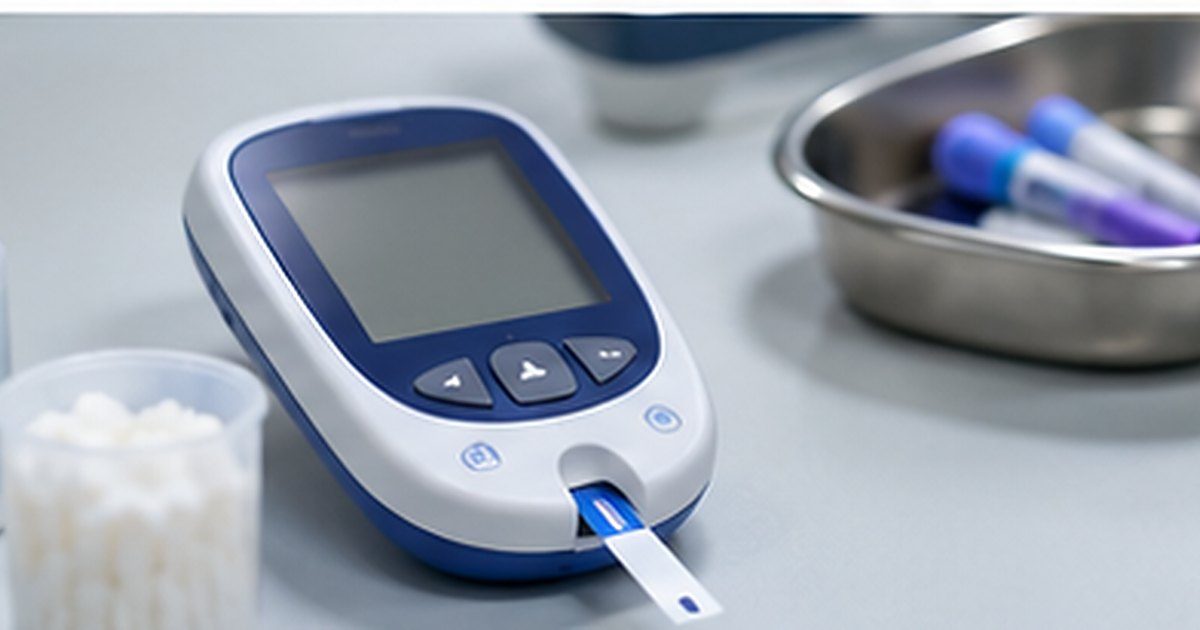
Point-of-care testing (POCT) makes certain diagnostic investigations available close to where patients receive care. Blood glucose meters, blood gas analysers and some rapid infectious disease tests are familiar examples. When used appropriately, these technologies can support timely decisions without sending every specimen through a central laboratory.
But the ease of operating a device can create a misleading impression that the testing process is simple. Reliable POCT still depends on patient identification, appropriate specimen collection, quality control, equipment maintenance, result interpretation and records.
The central question is not whether a device can be used outside the laboratory. It is who takes responsibility for the quality of the service when testing is distributed across many locations and operators.
At a glance: Safe point-of-care testing requires governance across clinical teams, laboratories and device operators. A programme should define accountable leadership, operator training, quality control, connectivity, result documentation, incident management and reassessment. Faster local testing does not remove the need for laboratory-quality oversight.
Begin with clinical need and accountability
Before purchasing equipment, an organisation should specify why testing is needed at the point of care. Is the objective to shorten a clinical decision pathway, support care in a remote setting or reduce transport to a central site? The proposed benefit should be balanced against test limitations, staffing and operational costs.
The UK Medicines and Healthcare products Regulatory Agency's guidance on POCT device management stresses the need for defined clinical purpose, clear accountability, training, quality assurance and laboratory involvement. The scope of support will vary between organisations, but ambiguity about responsibility is a predictable source of risk.
Governance should identify the clinical lead, the laboratory or POCT team responsible for quality oversight, device owners, training coordinators and those authorised to act on results. Service agreements can clarify roles between departments.
Operator competence is not a one-off event
POCT devices are often used by professionals whose primary role is not laboratory testing. A short demonstration may show which button to press but may not establish the competence needed to identify an unsuitable specimen, recognise an error code or respond to an implausible result.
Training should include the full process: patient identification, sample collection, device operation, quality control, limitations, infection prevention, documentation and escalation. Competency should be assessed and recorded according to the task and risk. Refresher training and reassessment are especially important when staff rotate or devices change.
The laboratory and clinical service should also consider who can train and assess operators, what happens when competence lapses and how operator access is controlled. Connectivity can help prevent use by unauthorised staff, but it cannot replace good governance.
Quality control needs a workable plan
A POCT programme should identify internal quality-control requirements, appropriate external quality assessment where available, maintenance schedules, reagent storage conditions and action limits. These arrangements need to function in busy clinical locations, not just in a laboratory quality manual.
If a quality-control result fails, staff must know whether patient testing can continue, how affected results are managed and who to contact. The same applies to device faults, expiry issues and interrupted connectivity.
Lot changes, software updates and device replacement may require acceptance checks or a documented impact assessment. These decisions should reflect the manufacturer's instructions, intended use and the organisation's quality system.
Connect the results to the patient record
Manual transcription creates opportunities for patient identification and reporting errors. Where feasible, connection to clinical information systems can improve traceability and reduce duplicate entry. However, a connected device also introduces interface and cybersecurity responsibilities.
The programme should establish which identifier is used, where results are stored, how operator identity is recorded and how an amended or invalid result is handled. A fast result is of limited use if it is not reliably available to the clinical team or cannot be audited later.
ISO 15189:2022 and POCT
ISO 15189:2022 applies to medical laboratories and incorporates point-of-care testing requirements. UKAS recognises the associated accreditation arrangements.
This does not mean every organisation running a POCT device is automatically accredited or that an existing laboratory accreditation covers every device and location. Scope and governance require explicit review with the responsible organisation and, where relevant, the accreditation body.
A well-run POCT service combines clinical value with laboratory-quality thinking. The aim is not simply to move testing closer to the patient, but to move reliable, appropriately governed testing closer to the point where a decision is made.
Where Optymum SS fits: Optymum SS can support POCT service reviews, training and competency frameworks, documentation, digital connectivity assessments and quality planning. Device deployment and patient testing remain with the responsible healthcare provider.
Related on this site: Education, Training & Professional Development, Testing & Diagnostics.
Key takeaways
- Define responsibilities before distributing devices.
- Train and reassess operators, not just instruments.
- Link quality management to result recording and escalation.
Frequently asked questions
Who is responsible for point-of-care testing governance?
Responsibilities depend on the healthcare organisation and jurisdiction. Effective programmes define clear accountability between the medical laboratory, clinical service, device leads and trained operators.
Does POCT need internal quality control and external quality assessment?
Suitable quality monitoring is important; the exact IQC and EQA approach should reflect the device, intended use, risk and available schemes.
Why is POCT connectivity important?
Reliable transmission of results into the correct patient record improves traceability, review and clinical communication, while reducing reliance on manual transcription.