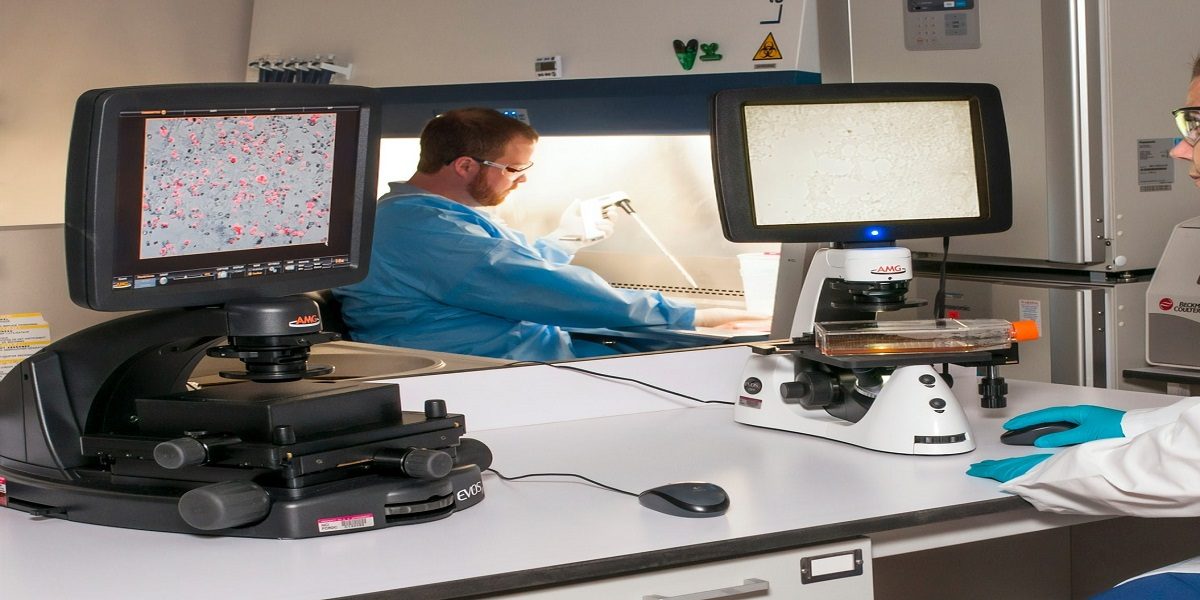
Molecular diagnostics has become a routine component of many medical laboratory services, from infectious disease testing to inherited disorders and oncology. Polymerase chain reaction (PCR) and other nucleic-acid methods offer the ability to detect defined genetic targets, but a technically capable platform is only one part of a reliable clinical service.
Introducing a molecular assay requires decisions about clinical purpose, specimen handling, assay performance, reporting, information systems and ongoing governance. A laboratory that plans these questions early is better placed to recognise gaps before patient samples enter routine testing.
At a glance: Introducing molecular diagnostics requires defining the clinical question, choosing a suitable assay, assessing the specimen and contamination pathway, establishing performance and planning reporting and quality control. A technically working PCR or sequencing system is not enough without a validated service pathway and trained staff.
Define the intended clinical use
The first decision is what question the assay will answer. A test designed to detect a pathogen in symptomatic patients is not automatically suitable for screening people without symptoms. A targeted mutation panel does not offer the breadth of whole-genome sequencing. A negative result only excludes what the method can detect within its validated conditions.
Clinical purpose determines specimen selection, performance requirements, reporting language and the limitations that users need to understand. Laboratories should agree whether the test will supplement an existing pathway, replace another method or operate as an initial screen followed by confirmation.
This is also where engagement with clinicians matters. If a test result cannot change diagnosis, risk assessment, treatment or another useful decision, its benefit may be limited even when the science is impressive.
Assess the entire specimen pathway
Molecular tests are sensitive to the condition of the material entering extraction and amplification. Specimen collection, transport, storage, cellular content and nucleic-acid quality can affect performance. In tumour testing, the proportion of relevant cells and the quality of preserved tissue may be particularly important. For infectious disease assays, specimen timing and sampling site can influence whether a target is detectable.
The laboratory should map how samples are received, prioritised, prepared, extracted and analysed, and how rejected or indeterminate samples are managed. Controls need to address relevant process failures. A negative amplification control is not necessarily evidence that extraction from the patient specimen was adequate.
Contamination control deserves specific attention. Workflows should separate areas and activities appropriately, manage amplification products and include controls that can detect contamination. The design depends on the platform and assay architecture, so procedures must be aligned with the manufacturer's instructions and local risk assessment.
Verify or validate the assay for the actual use
A commercial assay used according to its instructions may require local verification of relevant manufacturer claims. A modified, laboratory-developed or off-label procedure may require broader validation. The evidence should be proportionate to the clinical risk and intended use.
Relevant studies may address detection capability, accuracy, precision, reproducibility, specificity, interference, limit of detection and sample stability. For multi-target panels, performance can differ between targets; results should not be treated as interchangeable merely because they share one cartridge or workflow.
CLSI MM19, updated in 2025, addresses strategic planning, implementation, quality management and specialty considerations for molecular testing in medical laboratories. The 2026 UK validation guidance also discusses laboratory-developed methods and research-use-only components. Both reinforce the need to understand regulatory and quality requirements before go-live.
Make reporting clinically intelligible
A molecular result can be technically correct yet clinically confusing. Reports need to describe the target and method as appropriate, distinguish detected from not-detected results, and communicate relevant limitations.
Genetic testing may require expert interpretation, variant classification processes and appropriate pathways for consent, counselling or referral depending on the use. In infectious disease testing, the presence of genetic material does not necessarily establish viable organisms or clinical causation. Cycle threshold values should not be presented as standardised measures of pathogen load without method-specific justification.
Integration with LIMS and clinical systems should be tested, especially where reports contain multiple targets or complex interpretations. Amendment and critical-result procedures need to be clear.
Plan for the service after launch
A sustainable molecular service requires trained staff, reagents and supply arrangements, instrument maintenance, quality controls, external assessment where available and contingency plans. It also requires a realistic view of volumes and cost per reportable result, not just reagent price per reaction.
Review performance after introduction. Monitor invalid rates, contamination events, repeat testing, turnaround times, quality-control trends and requests for clinical clarification. A change in specimen type, extraction procedure, assay software or target set should prompt an assessment of whether additional evidence is needed.
The most important question is not whether the laboratory can run the assay. It is whether the laboratory can deliver a reliable, interpretable result that serves the intended clinical need.
Where Optymum SS fits: Optymum SS can support molecular diagnostic feasibility studies, method evaluation, scientific advisory, verification and validation planning, technical documentation and implementation readiness. Patient testing and clinical sign-off remain with appropriately authorised laboratories.
Related on this site: Genomics & Molecular Pathology, Research, Development & Scientific Advisory.
Key takeaways
- Define intended clinical use before selecting the assay.
- Treat contamination control and reporting as part of performance.
- Plan quality monitoring and change control beyond launch.
Frequently asked questions
What is needed to introduce a molecular diagnostic test?
Define intended use, specimen types, performance requirements, controls, extraction and amplification workflows, reporting rules, competencies and governance before routine testing.
How can molecular laboratories prevent contamination?
Use risk-based physical separation or unidirectional workflows where appropriate, controls, validated cleaning procedures, staff competence and monitored handling of amplified material.
Does a manufacturer-validated PCR test still need laboratory verification?
A laboratory generally needs appropriate local evidence that an established assay performs as claimed in its intended setting. Modifications may require broader validation.