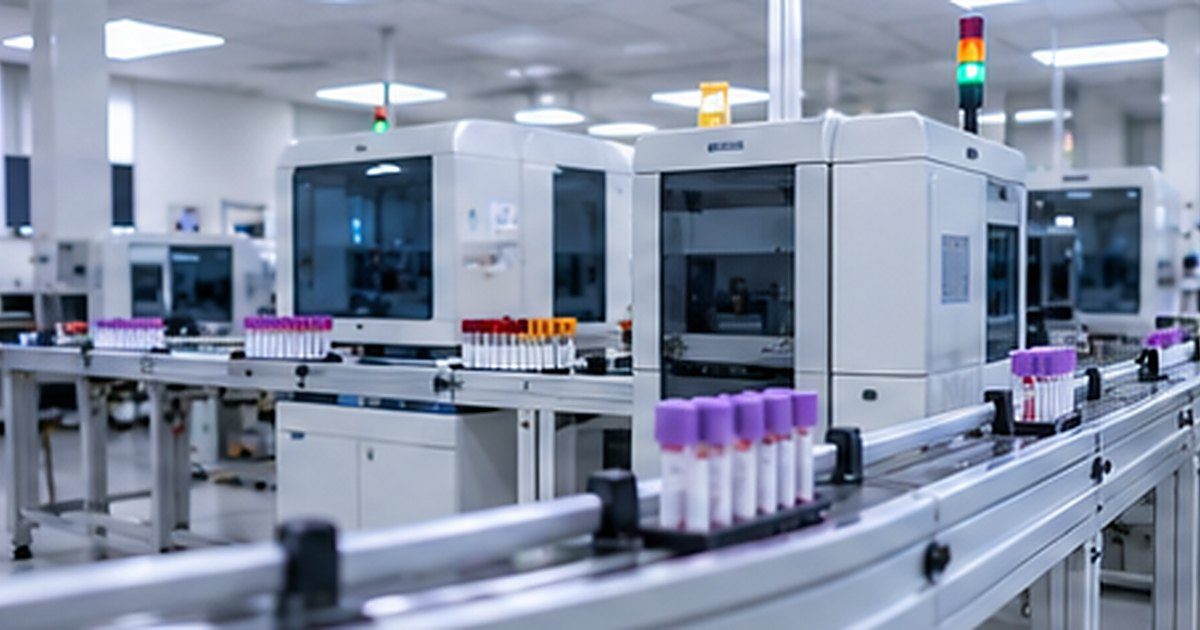
Automation is frequently presented as the answer to diagnostic laboratory workload pressure. Faster analysers, robotic sample handling and connected processing lines can bring genuine benefits. Yet laboratories can invest heavily in equipment and still find that turnaround times, staff pressures or rework remain stubbornly unchanged.
The reason is often straightforward: automating a poorly understood workflow can make one step faster without improving the entire service.
A more useful starting point is to map how requests, specimens, information and decisions move through the laboratory. Only then can the team identify which tasks are worth automating and what success should look like.
At a glance: Successful laboratory automation begins with workflow analysis, not equipment selection. Map sample arrivals, hand-offs, exception queues, turnaround times and staffing constraints first. Then test whether a proposed automation step reduces the real bottleneck without adding downstream errors, costs or complexity.
Find the real bottleneck
A laboratory's visible bottleneck may be an analyser queue, but the underlying cause could sit elsewhere. Specimens may arrive in concentrated batches from collection areas. Reception staff may spend time resolving missing information. Priority samples may repeatedly interrupt routine processing. Results may be held for manual checks long after analytical work has finished.
An end-to-end workflow map should therefore begin before the instrument and continue after it. Record the stages from test request through collection, transport, reception, centrifugation or other preparation, analysis, quality review, authorisation and reporting.
At each stage, examine workload by hour or shift, queue time, hands-on time, rework and failure points. Averages can conceal important peaks. A process that performs well at midday may be under significant strain at 9 am or during the overnight shift.
Separate throughput from turnaround time
A manufacturer's throughput specification describes instrument capability under stated conditions. It does not guarantee a particular patient-result turnaround time.
A high-throughput analyser may sit idle while samples wait for manual sorting. Conversely, a fast machine may simply transfer the queue to a downstream authorisation step. To assess the impact of automation, laboratories should consider the whole pathway and measure meaningful indicators, such as time from specimen receipt to result availability, urgent-test performance and manual interventions per sample.
These measures need definitions that everyone understands. For example, does turnaround time begin at collection, laboratory receipt or analyser loading? Does it end at analysis, technical release or availability to the requester? Different definitions can produce very different performance pictures.
Look for opportunities beyond large equipment purchases
Not every improvement needs a new automated track. Smaller changes may offer better value, particularly where current equipment is underused.
Examples include revising specimen routing, improving barcode quality, standardising sample acceptance rules, reducing duplicate data entry or reviewing middleware rules that generate avoidable manual work. Some laboratories may benefit from targeted automation of sorting, decapping or aliquoting rather than redesigning the entire facility.
The decision should reflect volumes, sample mix, service hours, available space, resilience requirements and maintenance arrangements. A solution suitable for a central high-volume biochemistry department may be inappropriate for a lower-volume specialist service.
Build the business case around total cost and risk
Purchase price is only part of the economic picture. A responsible business case includes installation, interfaces, consumables, service contracts, utilities, staff training, validation, downtime, contingency capacity and eventual replacement.
It should also account for benefits carefully. Reduced hands-on time does not necessarily mean staff positions can be eliminated. Capacity may instead be redirected towards complex work, quality management, specialist testing or resilience during vacancies.
Comparing realistic options is more valuable than assuming that the most sophisticated solution is best. One option might involve improving the existing workflow. Another might add targeted automation. A third could involve a wider platform change. Each can be assessed against the same clinical, operational and financial criteria.
Pilot, measure and adjust
Before a major rollout, agree measurable objectives and a baseline. Include specimen identification errors, turnaround time distribution, exception rates, instrument downtime, staff feedback and the quality of information reaching clinicians.
Implementation requires change control, training, technical verification and continuity planning. Staff who actually operate the pathway should help design it. Their experience often reveals workarounds invisible in procurement presentations.
Post-implementation review matters just as much. If turnaround time improves for routine samples but worsens for urgent requests, the redesign may need adjustment. If automation increases dependence on a single system, contingency procedures should be tested, not merely filed.
A better question than “What should we automate?” is “Which recurring constraint do we need to remove, and what is the safest way to do it?” Technology can then be selected to support a defined service objective.
Where Optymum SS fits: Optymum SS can support laboratory workflow reviews, automation readiness assessments, option appraisal and data-led improvement planning. Technology selection and deployment remain subject to the laboratory's requirements and governance.
Related on this site: Smart Lab & Digital Solutions, Clinical Biochemistry or Clinical Chemistry.
Key takeaways
- Map the specimen journey before selecting equipment.
- Measure total pathway performance, not analyser speed alone.
- Pilot changes and include exceptions and downtime in the business case.
Frequently asked questions
What should a diagnostic laboratory do before buying automation?
Map the current workflow and collect baseline data on specimen volumes, turnaround times, queues, error rates and staffing. Define measurable objectives before comparing technology options.
Does higher analyser throughput always improve turnaround time?
No. Transport, specimen reception, manual review, result authorisation and interface delays may dominate total turnaround time even when an analyser is faster.
How should laboratories measure automation success?
Compare agreed baseline and post-change measures, including end-to-end turnaround time, quality incidents, exception handling, total cost and staff workload.